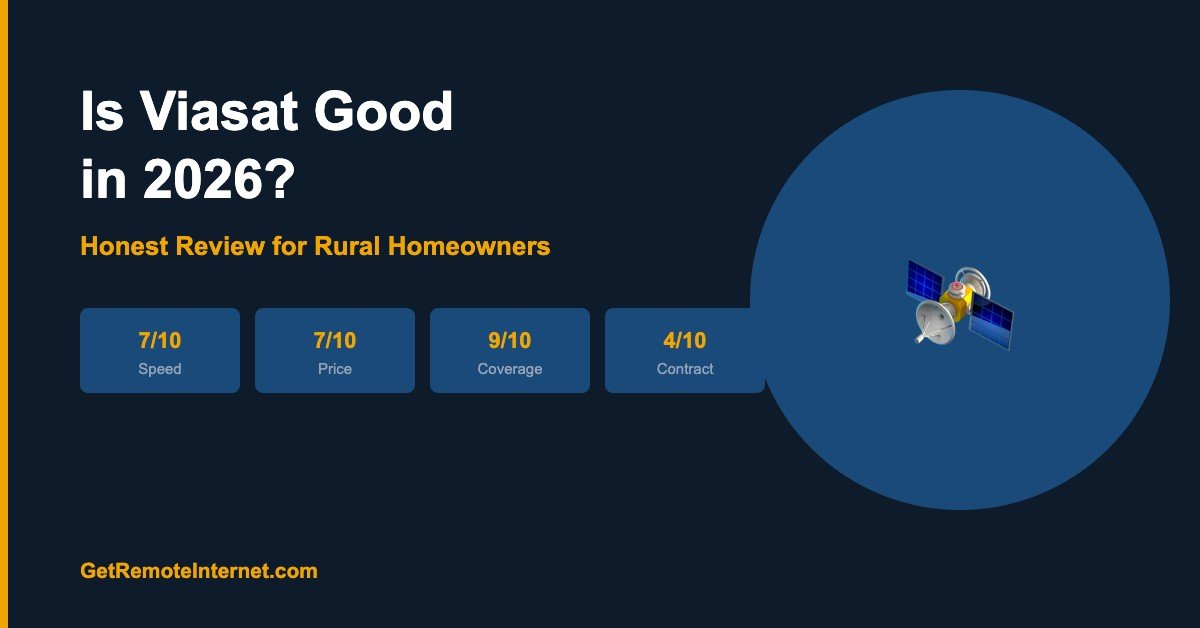
Is Viasat Good in 2026? An Honest Review for Rural Homes
Disclosure: GetRemoteInternet is reader-supported. This article contains affiliate links, and we may earn a commission if you purchase through them — at no extra cost to you. Learn more.
Viasat has been a rural internet staple for years — but with Starlink expanding rapidly and T-Mobile Home Internet undercutting on price, is Viasat still worth it in 2026? Here’s an honest look at what Viasat delivers and where it falls short.
Viasat at a Glance (2026)
| Feature | Details |
|---|---|
| Starting Price | $70/month |
| Download Speed | 25–150 Mbps |
| Latency | 500–800ms |
| Data | Priority data threshold, then slows |
| Contract | 2 years (ETF up to $500) |
| Hardware | Leased — professional install included |
| Availability | Near-nationwide |
What Viasat Does Well
✅ Near-Nationwide Coverage
Viasat covers virtually all of rural America via geostationary satellites. No waitlists, no coverage gaps. If you can see the southern sky, you can get Viasat — often within days of ordering, with professional installation included at no extra charge.
✅ No Equipment Cost
Unlike Starlink’s $599 upfront hardware requirement, Viasat leases you the dish with installation included. Lower barrier to entry for budget-conscious households.
✅ Faster Than HughesNet on Higher Plans
Viasat’s ViaSat-3 Americas satellite (launched 2023) delivers real-world speeds of 50–150 Mbps on Enhanced and Ultimate plans — meaningfully faster than HughesNet for households that need more bandwidth.
Where Viasat Falls Short
❌ High Latency
At 500–800ms latency, Viasat’s geostationary satellite creates noticeable delays on video calls and makes gaming impractical. This is physics — no plan tier changes it. If low latency matters, Starlink (20–40ms) or T-Mobile (under 50ms) are far better choices.
❌ Priority Data Caps
Every Viasat plan has a monthly priority data limit. Once exceeded, speeds slow during congestion periods. Heavy streamers and households with multiple users will burn through priority data quickly, especially on entry-level plans.
❌ 2-Year Contract with Steep ETF
Viasat locks you into a 2-year contract with early termination fees reaching $500. If Starlink becomes available at your address next month, you’re paying to leave. Starlink and T-Mobile are month-to-month with no penalty.
Who Should Get Viasat in 2026?
- Starlink isn’t available and you need internet immediately
- You want professional installation with no upfront hardware cost
- Your usage is light — browsing, email, standard streaming
- You’re in an extremely remote area with no cellular coverage
Viasat vs Alternatives
| vs. | Winner | Why |
|---|---|---|
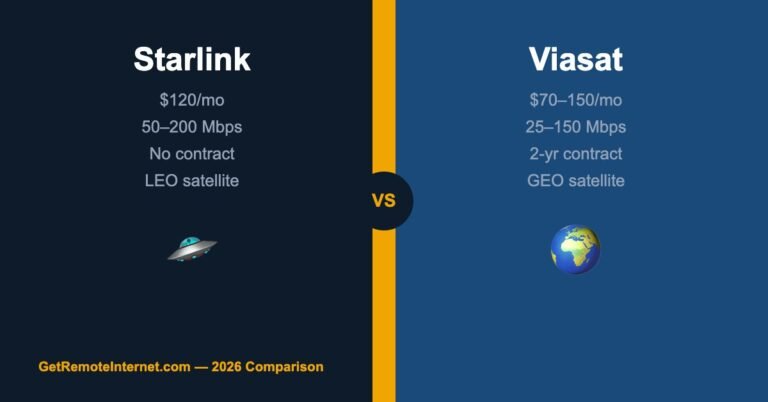
| Viasat vs Starlink | Starlink | Faster, lower latency, no contract, no data caps |
| Viasat vs T-Mobile | T-Mobile | Cheaper, lower latency, unlimited data — where available |
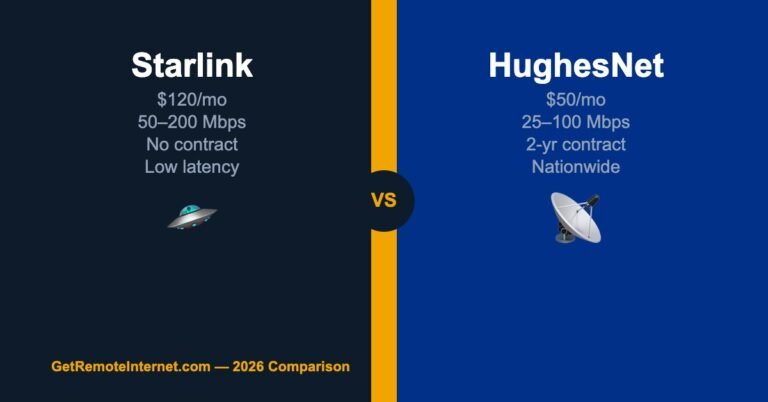
| Viasat vs HughesNet | Viasat (on higher plans) | Faster speeds on Enhanced+ plans; similar entry pricing |
| Viasat vs No Internet | Viasat | Always — coverage matters most when nothing else reaches you |
Frequently Asked Questions
Is Viasat good for streaming?
Yes for HD streaming on mid-tier and higher plans. 4K streaming is possible but will eat through priority data quickly. Multiple simultaneous HD streams on lower plans may cause buffering once priority data is exhausted.
Is Viasat good for working from home?
For email and documents, yes. For frequent video calls, the 500–800ms latency creates noticeable delays. Many WFH users on Viasat switch to audio-only calls to manage the experience. If you video call all day, Starlink or T-Mobile are significantly better options.
How long is the Viasat contract?
2 years with early termination fees of approximately $15 per month remaining, up to $500 maximum. Read the agreement carefully — Viasat’s contract terms are one of the most common complaints from rural customers who found a better option mid-contract.
📡 Get Rural Internet Tips — Free
Provider updates, signal booster deals, and honest reviews delivered to your inbox.