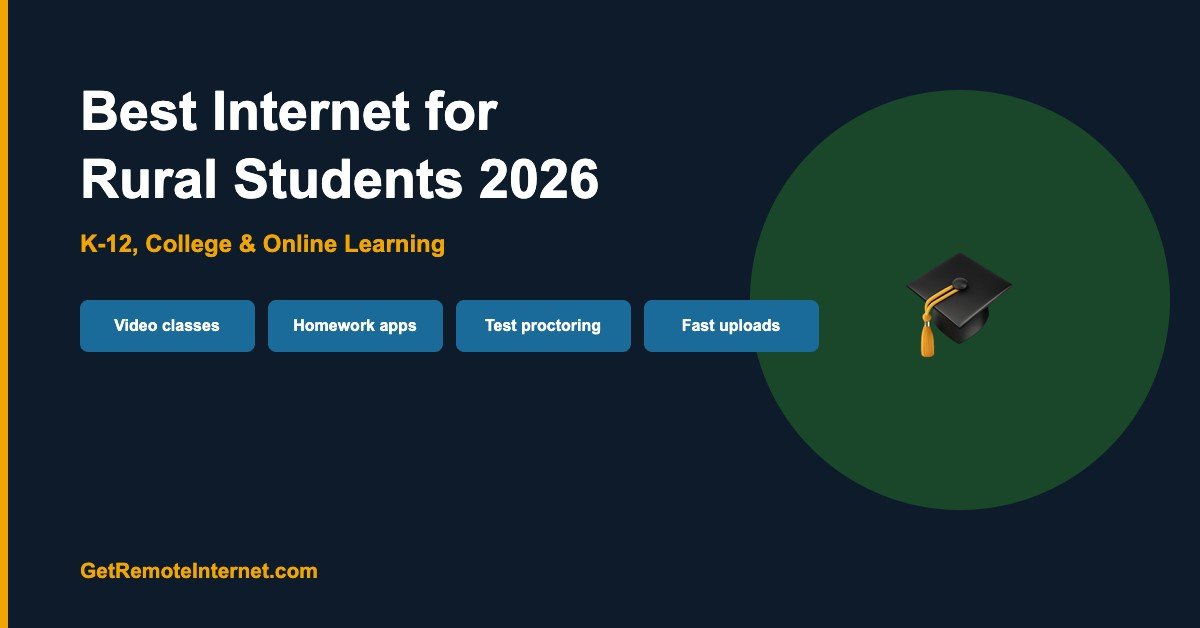
Best Internet for Rural Students in 2026
Disclosure: GetRemoteInternet is reader-supported. This article contains affiliate links, and we may earn a commission if you purchase through them — at no extra cost to you. Learn more.
Online learning has transformed education — but only if your internet can keep up. Rural students face unique challenges: unreliable satellite connections during exams, buffering during live classes, and upload speeds too slow to submit video assignments. Here’s what rural students actually need and which providers deliver it in 2026.
What Internet Speed Do Students Need?
| Task | Min Speed | Recommended |
|---|---|---|
| Video classes (Zoom/Teams) | 10 Mbps | 25 Mbps |
| Online testing & proctoring | 10 Mbps | 25 Mbps |
| Homework, research, cloud apps | 5 Mbps | 10 Mbps |
| Video assignment uploads | 5 Mbps upload | 15+ Mbps upload |
| Multiple students in household | 50 Mbps | 100 Mbps |
Critical note on proctoring software: Online exam proctoring tools (ProctorU, Honorlock, Respondus Monitor) require stable, low-latency connections. A single dropout during a proctored exam can invalidate the test. This is why geostationary satellite (HughesNet/Viasat) is risky for online exams — the high latency can cause session timeouts.
Best Internet Options for Rural Students
1. T-Mobile Home Internet — Best Value for Students
At $50/month with unlimited data and 72–245 Mbps speeds, T-Mobile Home Internet is the best value for rural students. Low enough latency for proctored exams, fast enough for HD video classes, and unlimited data means no surprise slowdowns during finals week. If T-Mobile covers your address, this is the call.
2. Starlink — Best Performance
Starlink’s 50–200 Mbps with 20–40ms latency handles everything a student needs — proctored exams, video uploads, multiple simultaneous users in the household, and late-night Netflix after the homework is done. At $120/month it’s pricier than T-Mobile, but the consistency is unmatched for rural areas.
3. HughesNet or Viasat — Usable With Limitations
Both can handle video classes and homework — but the high latency (500–700ms) makes proctored exams risky, and priority data limits can slow speeds during heavy-use periods like finals. If these are your only options, notify your school’s IT department — many have accommodations for students with satellite internet limitations.
Free & Discounted Internet for Rural Students
- T-Mobile’s Project 10Million: Discounted home internet for K-12 students on free/reduced lunch programs — check eligibility at t-mobile.com/home-internet/student
- Starlink’s Education Program: Starlink offers discounted hardware for qualifying schools and educational institutions
- E-Rate Program: Federal program that subsidizes internet costs for schools and libraries — ask your school district if they participate
- Pell Grant and financial aid: College students can sometimes use financial aid funds for internet-related technology expenses — check with your financial aid office
Frequently Asked Questions
Can I take online exams on satellite internet?
On Starlink or T-Mobile Home Internet, yes — both have low enough latency for proctoring software. On HughesNet or Viasat, it’s risky. If you’re on geostationary satellite, contact your professor or IT department before exam day and request accommodations or alternative testing arrangements.
What’s the best hotspot for a rural college student?
The Netgear Nighthawk M6 paired with a T-Mobile or Verizon unlimited plan gives you portable internet anywhere you have cellular signal — at home, on campus, or commuting. See our best rural hotspot guide.
📡 Get Rural Internet Tips — Free
Provider updates, signal booster deals, and honest reviews delivered to your inbox.